
Top 4 Iranian Livestock Guardian Dogs
Iran is home to some of the most powerful and skilled livestock guardian dogs in the world. For centuries, these breeds have played an essential role in protecting livestock from predators, thieves, and other threats, while assisting shepherds in managing their herds across the country’s diverse landscapes. From the mountainous regions of Kurdistan to the fertile pastures of Khorasan, each breed has developed unique physical traits, temperament, and abilities tailored to its environment and the needs of the herders.
This article draws on insights from Mammals of Iran, Canids and Hyaenas by Ali Golshan, whose extensive research and dedication to documenting Iran’s wildlife provide invaluable guidance for understanding these remarkable dogs. We sincerely thank Ali Golshan for his contributions, which form the foundation of our exploration of the top four Iranian livestock guardian dogs: the Qahderijani, Sarabi (Persian Mastiff), Kurdish Mastiff, and Khorasani.
Khorasani Livestock Guardian Dog
Origin and Historical Background
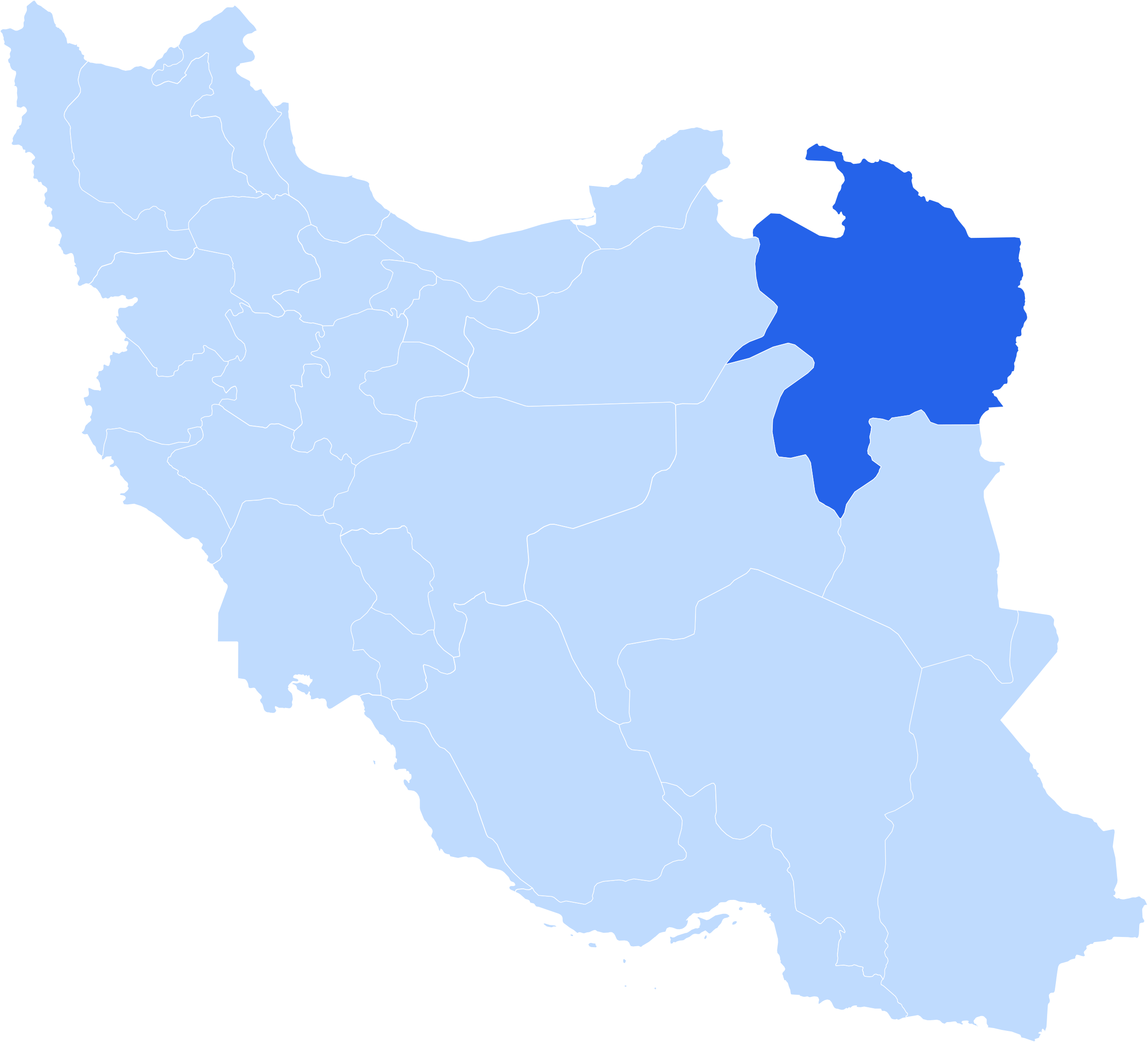
Taybad is an ancient city in Khorasan Province, located near the border with Afghanistan. Archaeological findings show that at least by the third millennium BCE, people were living in this region. They were familiar with animal husbandry and farming, and to this day, they still rely on these livelihoods. Like herders in other parts of Iran, the people of this area used efficient livestock guardian dogs to protect their livestock and property from thieves and attacks by wild animals.
The origin of these dogs lies in parts of Central Asia, Khorasan, and some western regions of Afghanistan. The similarity of Khorasani dogs to the livestock guardian dogs of Central Asia and the Afghan livestock guardian dogs (also called Kuchi dogs) indicates a shared ancestry. Even so, living in different climatic conditions has caused slight differences in appearance among the dogs of each region.
Appearance
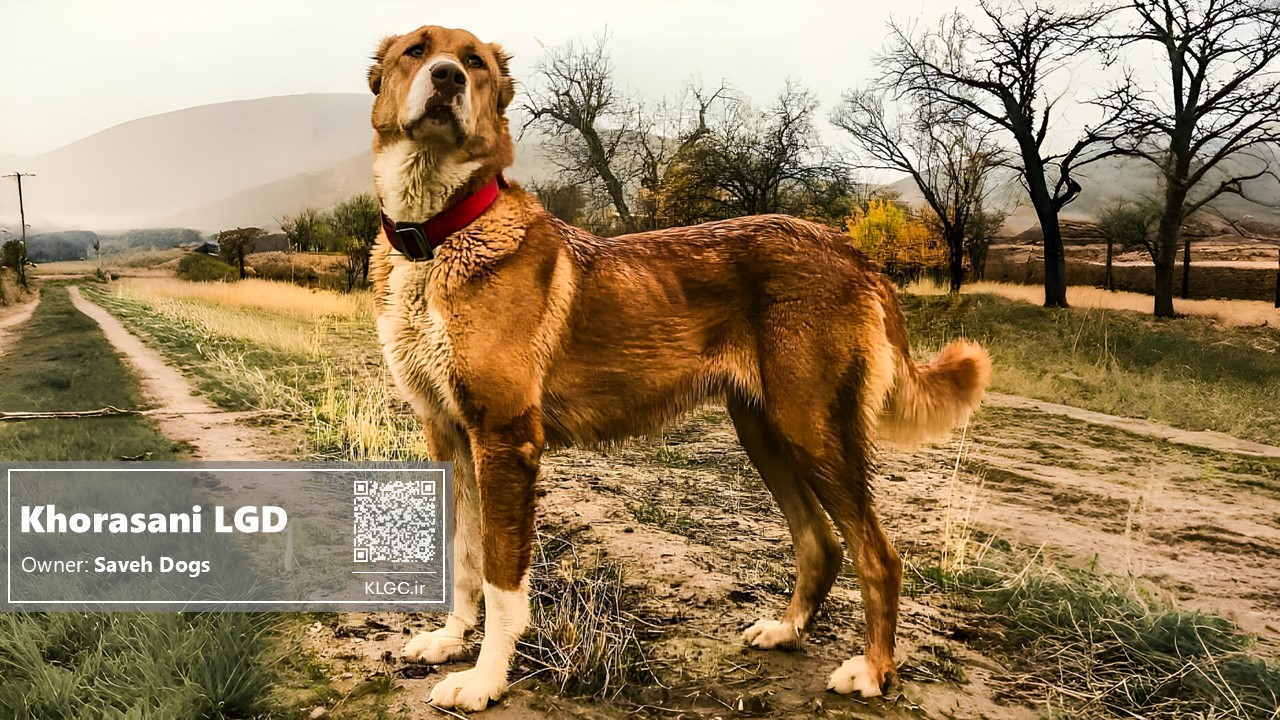
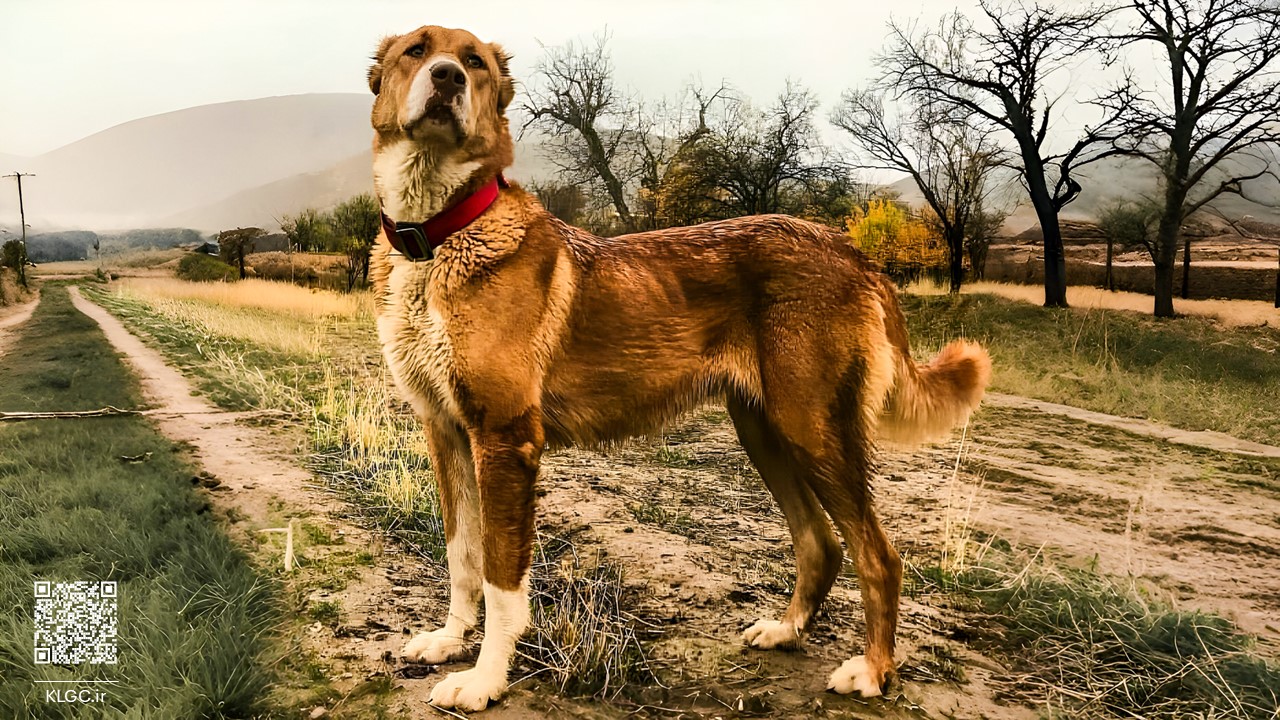
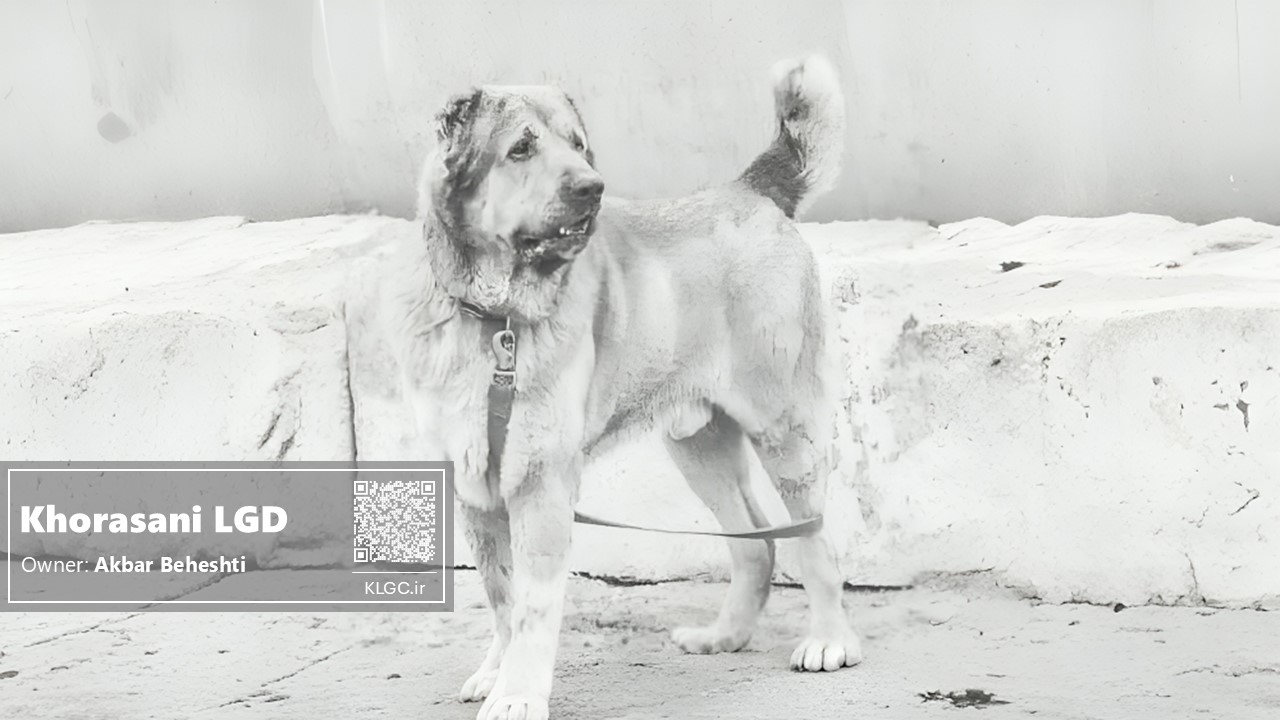
The Khorasani dog has a broad, large skull, a broad and short muzzle, powerful jaws, small eyes, medium drooping ears, a relatively short and thick neck, a broad chest, medium withers, a body that is not very long but heavy and muscular, thick and resilient skin, thick and strong legs, large paws, and a long, thick tail.
Khorasani shepherds divide these dogs into two distinct types. The first type is known as “Lion-like.” This type is large-framed and long-haired and is mostly seen in mountainous areas. The second type, known as “Leopard-like,” has a more delicate build and a less hairy body than the first type and lives in plains and low-lying areas. These dogs are more numerous and have more admirers than the first type.
Khorasani dogs show great color variety and are usually seen in white, cream, light brown, dark brown, brick-red, yellow, black, and piebald (white body background with brown and yellow spots). The most famous color among Khorasani dogs is the striped (tiger-like) coat, which is locally also called “Rakh” or “Mari.” The “Rakh” color has three kinds: Rakh-Sorkh (red-brick body background), Rakh-Sooz (gray body background), and Rakh-Sabz (greenish body background), each bearing dark vertical stripes.
Some Khorasani dogs have blue eyes, which are locally called “mirror eyes.” Sometimes one eye is blue and the other brown. In terms of coat, Khorasani dogs are divided into three groups: short, long, and medium-length coats. In most areas, short and coarse-haired specimens are generally more favored and valued.
Performance
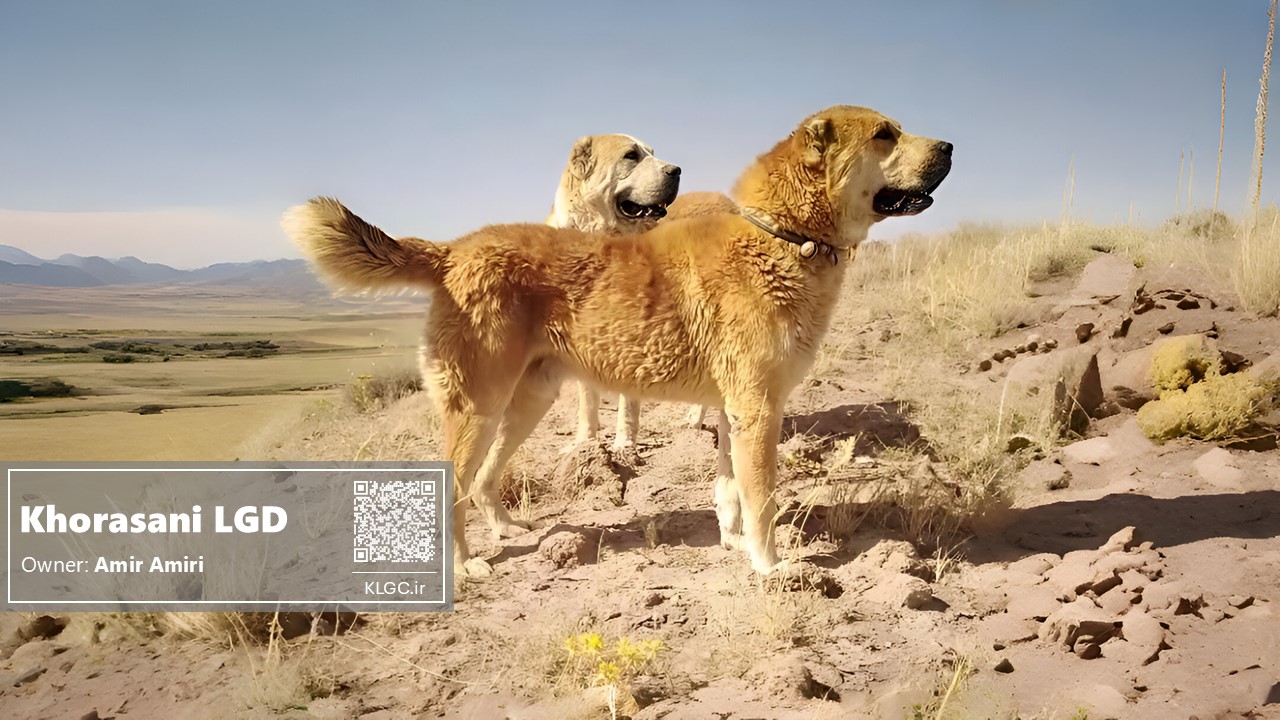
Khorasani dogs are classified as livestock guardian dogs. Because of their alertness, strength, and instinct to fight strangers and engage with wild animals, they are highly effective at protecting livestock herds. Their courage, agility, and fighting spirit have also led to their use in some regions for dog fighting.
Khorasani dogs are very wary and sensitive toward strangers, and they protect their owner’s property and belongings to the last breath. Their alertness and strong sense of duty have made many people use these dogs for guarding.
Training and Care
Shepherds usually keep their dogs with sheep and goats from puppyhood so the dogs become familiar with livestock. The ears and tail of the puppies are cut with a blade or scissors between four days and one month after birth. Some cut the tail halfway, while others remove all of it except for the last vertebra. Some Khorasani puppies are born with very short tails.
From six months of age, the puppies are taken into the herd together with older, more experienced dogs so they can learn the methods and ways of protecting the livestock. In Khorasan, as in many parts of Iran, shepherds feed their dogs with a mixture of barley flour, milk, and oil. Sometimes meat from donkeys that die of old age or injury is also given as food.
Khorasani dogs are highly resistant to harsh conditions and diseases. If a puppy becomes ill, it is separated from the others and kept in a warm place. Some shepherds apply henna to the legs and paws of their dogs from puppyhood, believing this makes the skin tougher and the paws harder, allowing the dog to move easily over rough and stony ground.
If Khorasani dogs are injured in fights with each other or in struggles with wild animals, shepherds treat their wounds with burnt oil, and if the injury is deep, they use a kind of black oil made from sheep dung.
Qahderijani Livestock Guardian Dog
Origin and Historical Background
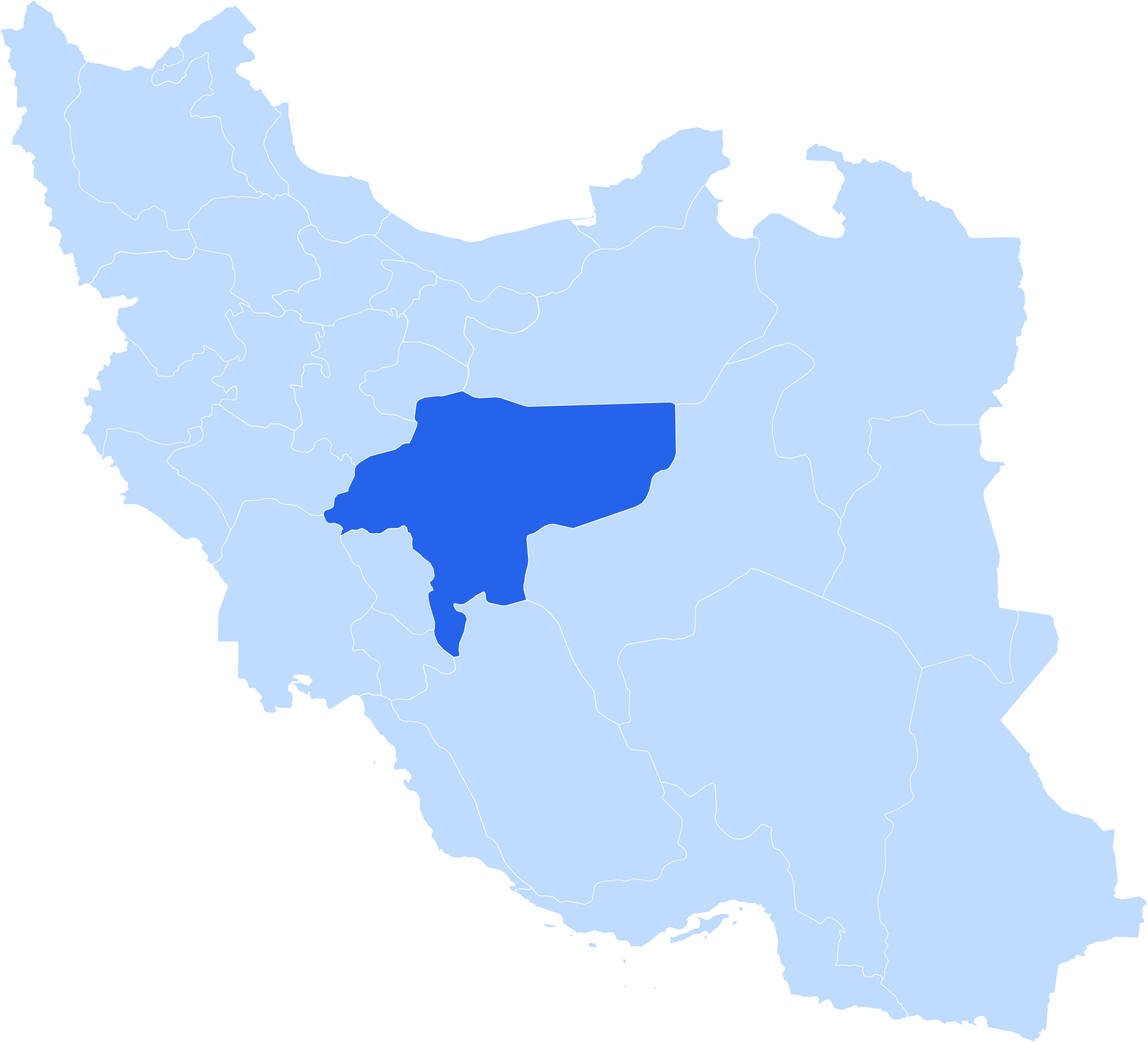
Today, most Qahderijani dogs are found in Isfahan Province, particularly in Khomeyni Shahr. Historically, this city was created from the merging of three villages, which earned it the name “Sedeh” or “Se-Dezh” (Three Fortresses). The people of this area had a long tradition of herding and livestock farming, relying on skilled flock dogs to move their animals to regions with favorable climates during different seasons. As lifestyles changed over time, many Sedeh herders abandoned pastoral work and settled in larger cities, selling off their livestock—including sheep, goats, mules, and dogs—to neighboring herders in the Qahderijan (Qadrajun) area. From then until today, the breed has been known as the Qahderijani dog, or in the local dialect, the Qadrajuni dog.
Appearance
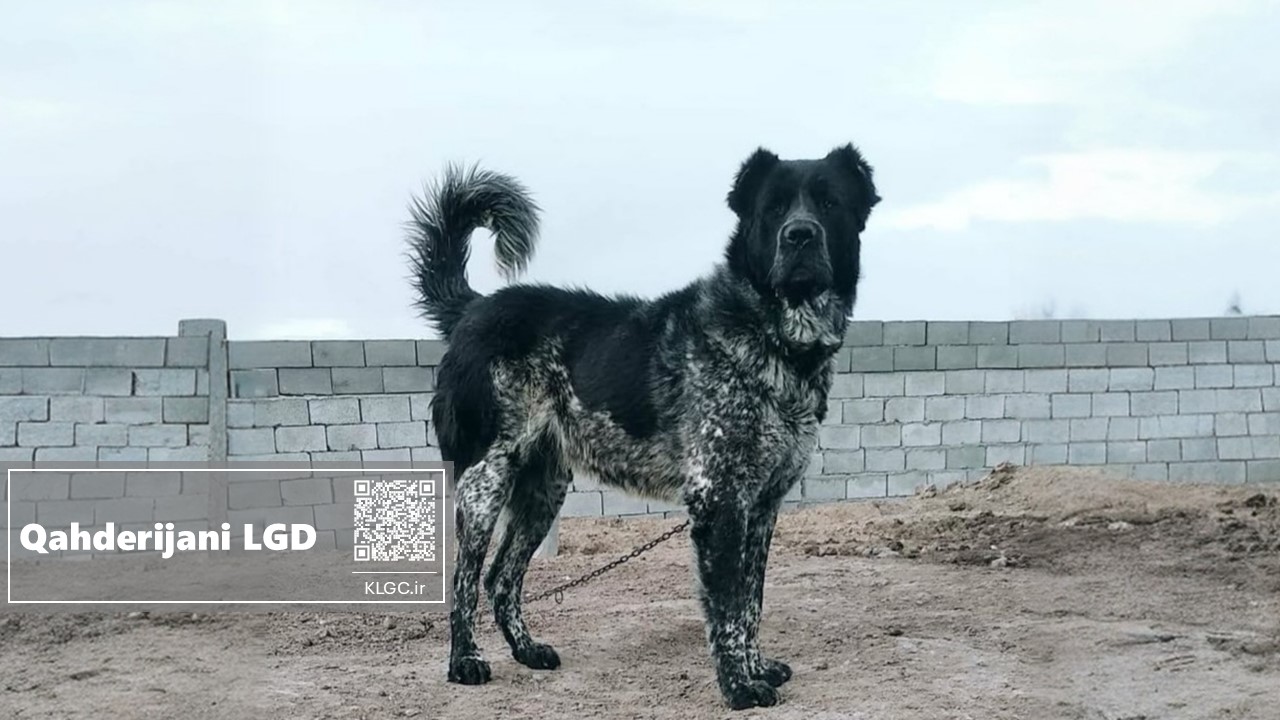
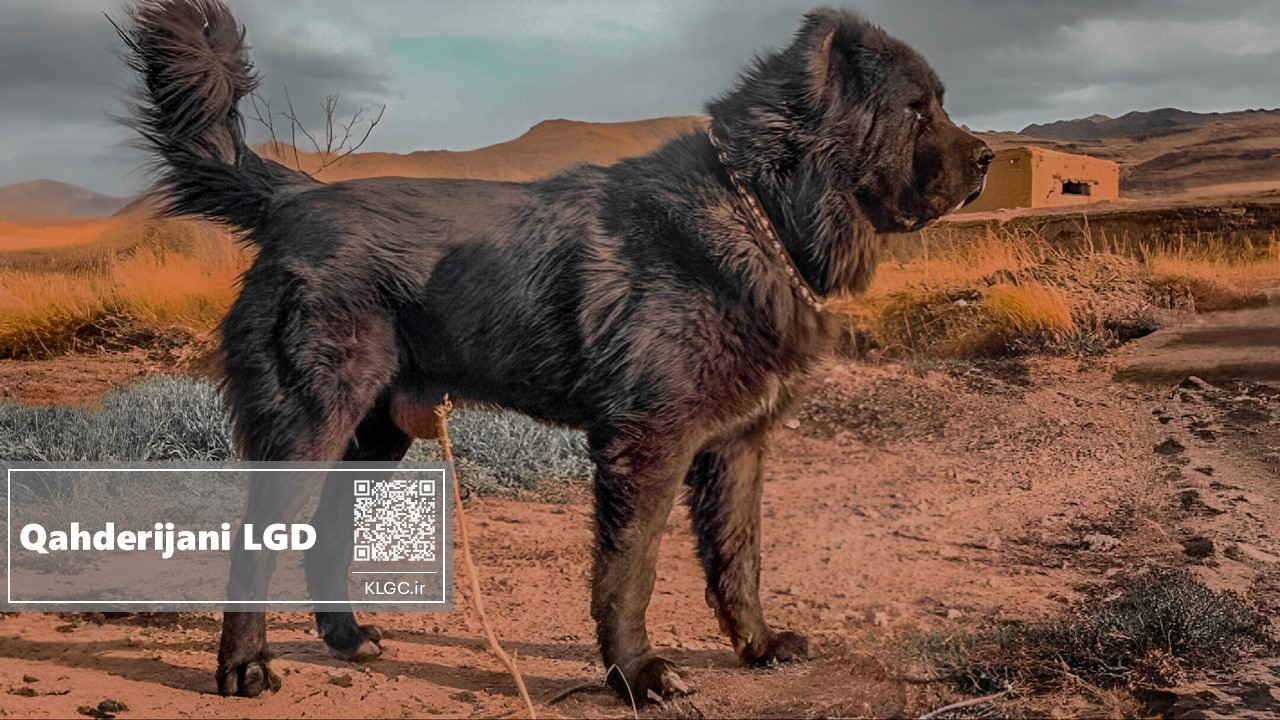
The Qahderijani dog has a large head, broad muzzle, drooping ears, small eyes, a strong body, broad chest, relatively short legs, large and strong paws, and a long, bushy tail. The body of this dog is covered with long, fine, straight hair that makes it appear larger. Among these dogs, some individuals with short coats can also be seen. Qahderijani dogs spend about half of the year in summer pastures and cold regions. The long, dense hair covering their entire body allows them to easily withstand the climate of mountainous areas.
The main coat colors seen in Qahderijani dogs include black body with white chest and neck, Gray, white body with large black spots, solid black with a white spot on the chest or tips of the paws, solid white with a black spot on the chest or tips of the paws, and Yellow.
Performance
Thanks to their intelligence, courage, physical strength, independence, and loyalty, the Qahderijani dog is regarded as one of the finest Iranian breeds for guarding livestock and providing protection. They are also highly resistant to disease and can adapt well to a wide range of climates.
One of their primary tasks is defending herds against thieves, especially at night. Thieves often observe the shepherd and herd for hours, waiting for the right moment to strike. To steal animals, they typically begin by throwing stones with a device called a Gholab-Sang (stone-thrower), scattering the herd before selecting the largest animals to take. If the thieves are few in number and the shepherd is armed, he may confront them directly. Otherwise, the responsibility for driving away intruders rests entirely on the dogs. Qahderijani dogs usually sense danger before the attack and circle the herd alertly. Each herd is typically guarded by 7 to 10 dogs that attack intruders as a pack. While they often succeed in repelling thieves, some dogs are sometimes badly injured by stones or sticks during these confrontations.
During the day, when the herd is on the move, several dogs walk ahead of the shepherd and animals to scout the path. If a wild animal blocks the way, they chase it off before the herd passes.
Young Qahderijani dogs usually join the herd at around five to six months of age. From then, they work alongside older, more experienced dogs, learning how to fight wild animals, repel strangers, and confront raiders. If livestock fall behind the herd—or if an animal is unable to move due to illness or giving birth—one of the dogs remains with it, guarding until the shepherd arrives.
Persian Mastiff (Sarabi)
Origin and Historical Background
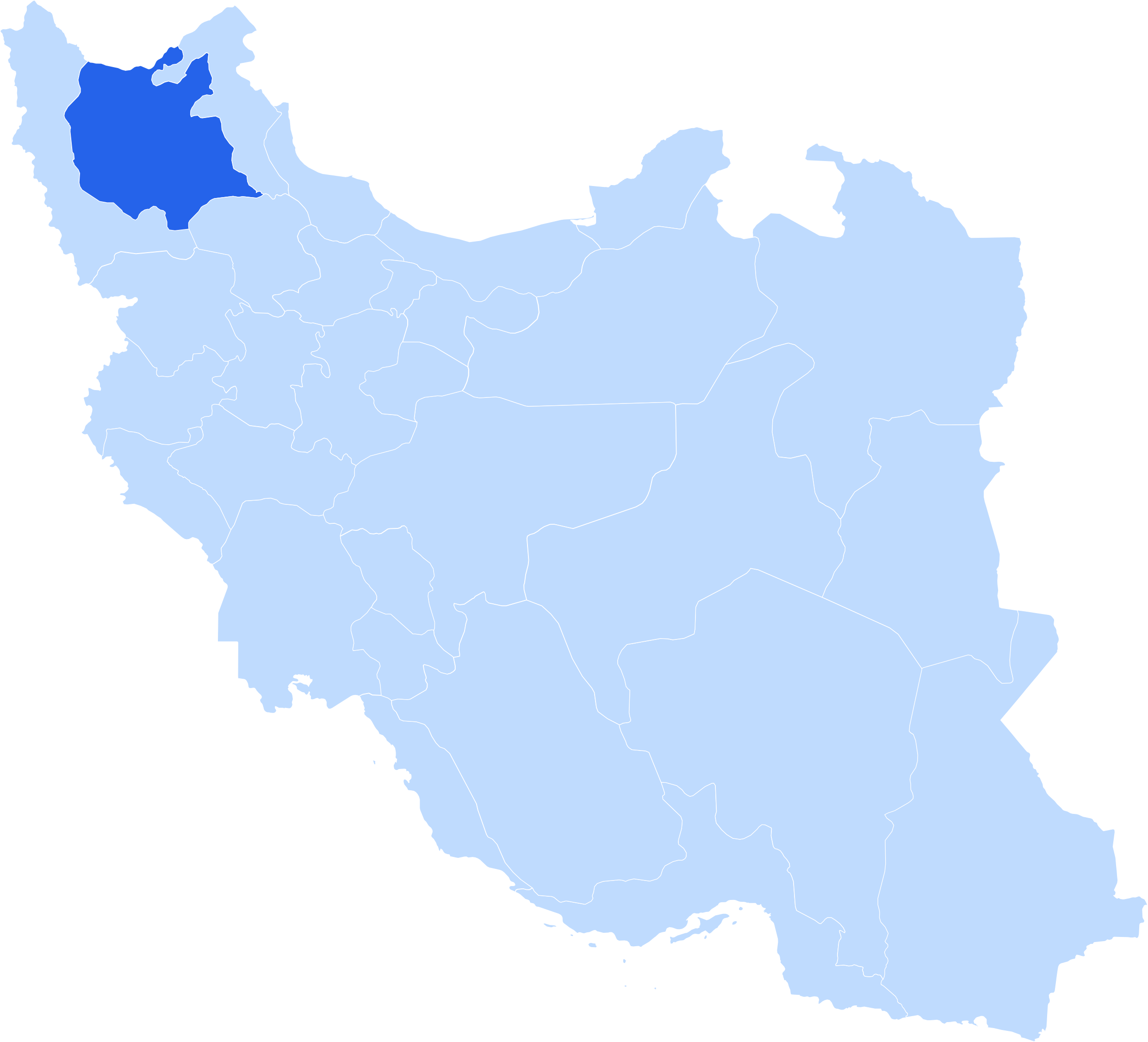
Archaeological findings, such as Urartian inscriptions from the 7th–9th centuries BCE and pottery from Parthian tombs, reveal that this area has long been inhabited and served as a key stop for trade caravans. For centuries, the people of Sarab have primarily engaged in herding and livestock farming. Thanks to the region’s favorable climate and extensive pastures, Sarab offered ideal conditions for pastoral life, enabling its people to raise superior livestock and breed highly capable dogs.
Several historians and travel writers have also noted the region’s vast livestock herds and the powerful, robust dogs that accompanied them. Even today, Sarabi dogs and the local Sarabi cattle—renowned as one of Iran’s top dairy breeds—continue to enjoy the same fame and respect they have held for centuries.
Archaeological evidence from prehistoric times indicates that across a vast region stretching from India to Iran, large, powerful dogs with massive skulls once thrived. These dogs were used both to confront wild animals and in warfare. Known today as Mastiffs, these dogs historically appeared in various forms, including the Indian Mastiff, the Assyrian Mastiff, and the dogs of the nomadic Indo-Iranian tribe known as the Alans (Alaunt).
While historical records indicate that the Achaemenids had access to large Indian dogs for protection and warfare, Iranians’ familiarity with large-bodied dogs and their use in hunting wild animals predates the Achaemenid era. For instance, an artifact from the Elamite period depicts three dogs confronting ferocious lions. These dogs are nearly as large as the lions, wear collars, and closely resemble the modern Sarabi dogs in both size and appearance.
Another early type of herding dog was associated with the Alan tribe. The Alans, who spoke an Iranian language, were one of the principal Sarmatian tribes. Thousands of years ago, they migrated westward from the northern Caucasus in search of new pastures. Historical records indicate that Alan warriors even advanced as far as Spain and North Africa. As a nomadic people, they relied on strong and capable dogs to protect their livestock. Ancient European sources often mention these dogs, and medieval paintings depict them guarding herds, hunting, and confronting wild animals.
Today, many canine experts recognize that the powerful dogs the Alans brought to Europe were the ancestors of several modern dog breeds. For example, the book Dog Breeds notes the origins of the Mastiff and Great Dane: “In the 5th century CE, the Alans, the ‘Iranian nomadic tribe,’ brought Germany, France, Spain, and parts of Italy under their influence. They had a strong Matin-type dog, capable of hunting bears and boars. This dog was especially admired in Germany, and after the Alans migrated, Germans crossed it with Irish hounds, producing a large, agile, and elegant dog now known worldwide as the Great Dane.”
Although the dogs of the Alan tribes have long disappeared, and no trace remains of the dogs Assyrian warriors once used to hunt lions, many of their physical characteristics are still clearly visible in today’s Sarabi dogs in Iran. Undoubtedly, Sarabi dogs have inherited numerous traits from these ancient giants, including their large heads and powerful jaws.
Appearance
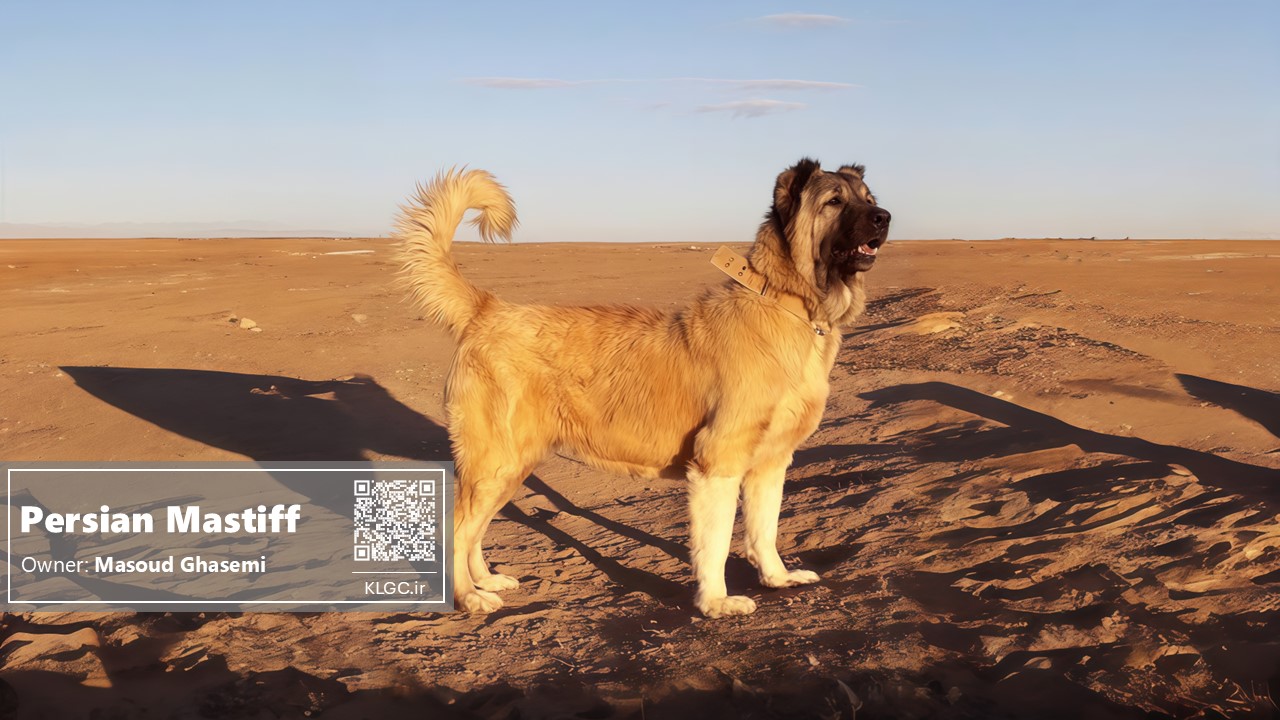
The Sarabi dog has a broad, large skull; a short, wide, square-shaped muzzle; powerful jaws; medium, drooping ears; a thick, muscular neck with loose skin; a broad chest; a heavy, long, muscular body; a strong bone structure; thick, very resistant skin; strong, thick legs; large paws; and a long tail, which it elegantly curls over its back.
The eyes are round and small, usually black, dark brown, or hazel in color. The ears are triangular and drooping. The paws are large and wide, with hard, thick pads that make long walks easier. In long-haired Sarabi dogs, coarse hairs grow between the toes, aiding movement on frozen and snowy ground.
Sarabi dogs have three types of coat. The first type has long, soft hair. These dogs are hairy, with a long mane around the neck and a bushy, curled tail. In winter, the length of the body hair increases by 8 to 10 centimeters. The length of the tail hair is usually twice that of the body hair. According to some herders of the Sarab region, the most authentic Sarabi dogs in the past were of the long-haired type. Over time, however, as these dogs interbred with the short-haired nomadic dogs present in the area, another type gradually appeared, with thick skin and coarse, short hair, which today is very popular. These short-haired dogs are highly favored and now make up the majority compared to long-haired Sarabi dogs in the rural areas of northwestern Iran. One reason for the popularity of the short-haired type is their thick, resistant skin, which reduces injuries during fights with wild animals or other dogs. Another type of Sarabi dog is intermediate between the long-haired and short-haired types.
Sarabi dogs exhibit a wide variety of colors and are usually seen in yellow, brown, solid black, brick red, gray, white, and sometimes brindle. Cream or light beige with a dark muzzle and ears is also one of the most popular colors.
Performance
The Sarabi dog is among Iran’s finest herding and guarding breeds. Its large size, remarkable strength, and courage make it highly effective at protecting livestock from wild animals. Despite its heavy build, the Sarabi dog moves quickly and, when confronting predators such as wolves, boars, or bears, it faces them with initiative, bravery, and power, often prevailing in the encounter.
Typically gentle with livestock, the Sarabi dog is a vigilant guardian. It is naturally wary of strangers and can act aggressively when needed. The breed is also employed as a watchdog for homes and gardens. Living with a Sarabi dog is relatively easy, as it does not demand excessive exercise and rarely barks without reason. When properly trained from puppyhood, it becomes calm, obedient, and affectionate. The Sarabi dog is friendly with children and enjoys patrolling and engaging in activities alongside its owner.
Kurdish Mastiff
Origin and Historical Background
The dog that we know today as the Kurdish mastiff is very similar to the Assyrian Mastiff dogs of ancient times in terms of appearance. Assyrian dogs were used as guard dogs and hunting dogs at that time, and scenes of hunting animals, especially lions, by these powerful dogs have been depicted many times in Assyrian sculptures.
After the defeat of the Assyrians by the Medes, the Babylonian Empire was finally conquered by Cyrus the Great. Babylon was officially considered part of the Achaemenid Empire and had to pay taxes to the king's court. The Greek historian Herodotus mentions in one of his books that there was a large herd of Indian dogs in the possession of the Achaemenid troops, which were kept in Babylon, and four large villages in the plains of Babylon were responsible for providing food for those dogs instead of paying taxes. This shows how much the Achaemenid troops valued these large and strong dogs. According to historical evidence, the Achaemenid soldiers carried these dogs with them in some of their battles. Some historians suggest that the Achaemenid army took these dogs to Greece for the first time. Herodotus also mentions Xerxes's campaign to Greece and writes that he took with him countless groups of men and women, pack animals, as well as many Indian dogs.
After the defeat of the Achaemenid armies, the dogs that their soldiers carried with them fell into the hands of the Greeks as valuable spoils of war. After that, these dogs were bred in an area called Molossia, located in the northwest of ancient Greece, and from there, they gradually spread throughout the Mediterranean.
According to historical evidence, the Phoenicians also exported large mastiff dogs to the Mediterranean. One of their main professions was maritime trade, and they controlled most of the markets of that time from the eastern Mediterranean to Spain. The Phoenicians were under the rule of the Assyrians in the 8th century BCE. During the time of Cyrus the Great, they became subjects of Iran and remained loyal to this land until the end of Achaemenid rule. Being skilled merchants, they quickly realized the value of the large dogs that the Achaemenids possessed, and they took these dogs with them as valuable goods for sale during their business trips.
The dogs that the Phoenicians and Greeks took to other countries were the origin of many large dog breeds today. For example, one of these breeds is the Spanish Mastiff, which is very similar to the mastiff dogs of ancient times and the Kurdish mastiffs of today. Historical sources on this breed clearly state that the Spanish Mastiff originated from the dogs that the Greeks and Phoenician sea traders brought with them from the western regions of Asia to Iberia (Spain).
Appearance
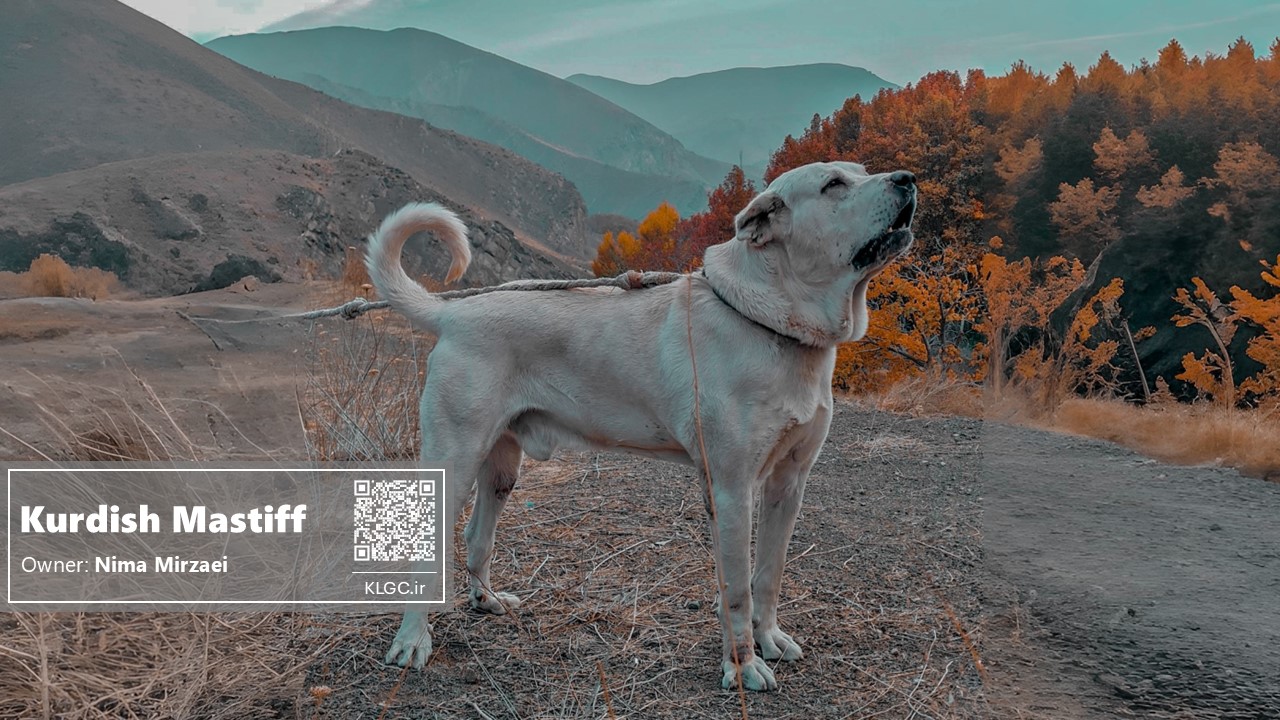
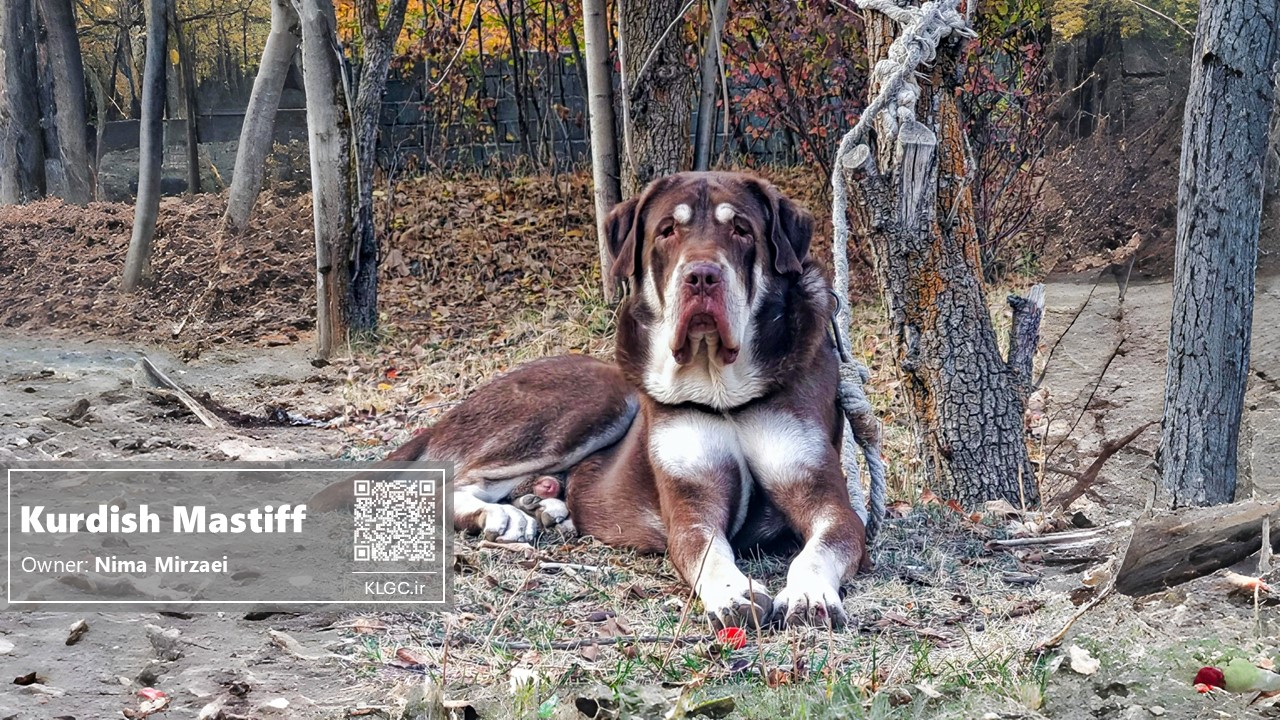
The Kurdish mastiff has a broad, large skull, a wide muzzle, drooping lips, strong jaws, and medium, drooping ears that lie completely on both sides of the head. Its eyes are small, and it has a thick, muscular neck with voluminous, hanging skin under the neck (dewlap). The dog possesses a broad chest, an elongated, muscular body, a large bone structure, very thick skin, strong limbs, large paws, and a relatively long tail, which it carries in a loop at the end.
One notable physical feature of Kurdish mastiffs is their broad and heavy head and chest, combined with an elongated body, meaning the front part of the body is more voluminous and heavier than the rear, and the body length exceeds the height.
Kurdish mastiffs come in various colors, including light and dark cream, solid white, yellow, red, brick brown, piebald, and dark gray with a lead-colored tip, often referred to as “blue” or “sheen.” Their skin is extremely thick and resilient, which helps reduce injury when interacting with other dogs or confronting wild animals. Additionally, the thick, double-layered skin provides excellent protection against the cold of highland and mountainous regions. Their body is covered with short, coarse, and dense hair.
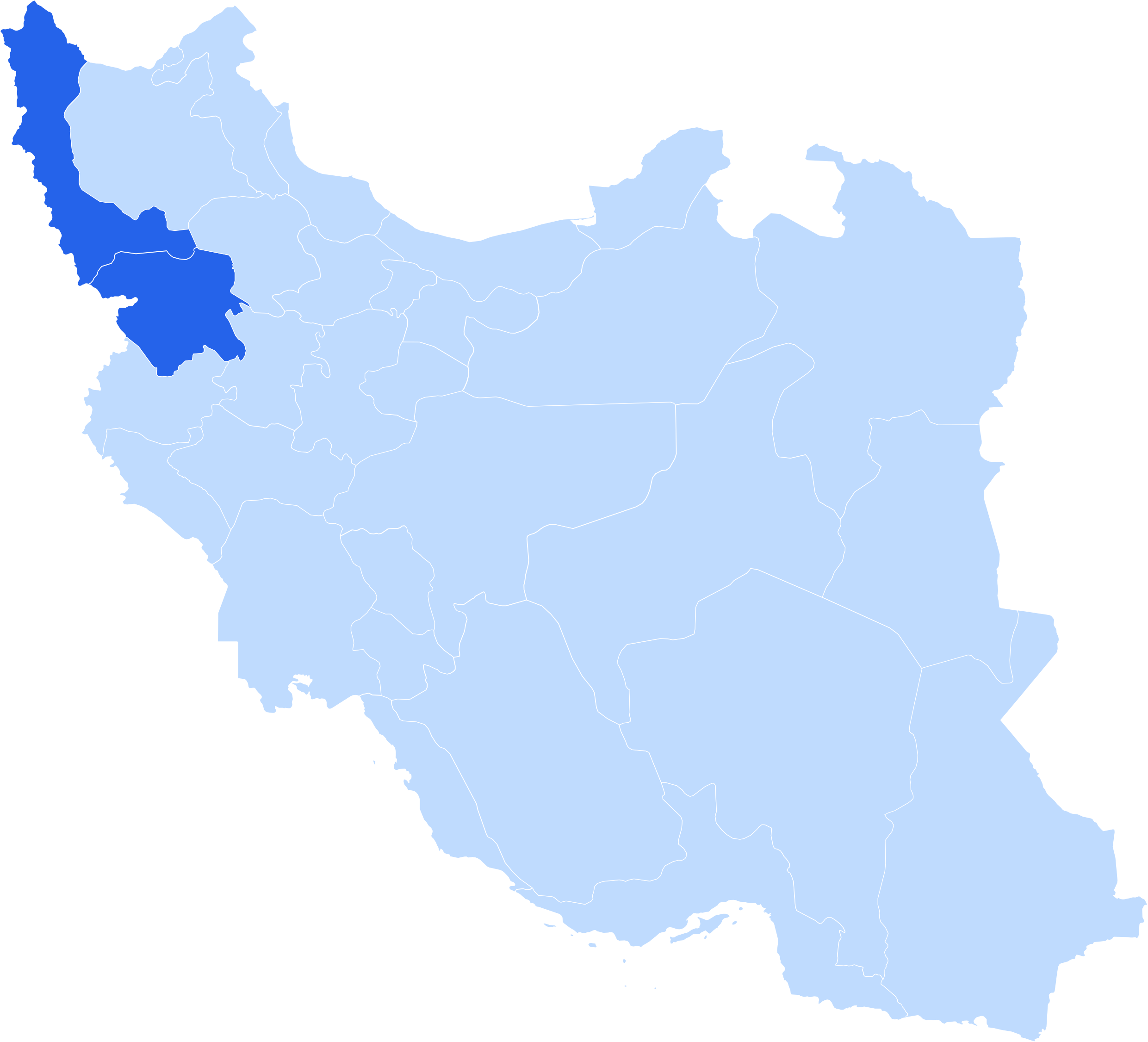
Today, two types of Kurdish mastiffs exist in the Kurdish regions of western Iran and in villages near the Iran-Iraq border. The first type is a large dog with relatively long limbs, a broad neck, and thick, hanging skin. This type is usually light-colored or solid white, and only a few individuals of this type remain in western Iran.
The second type is known as the Peshdar, named after a village in the “Zaraveh” mountainous region of Iraqi Kurdistan. For many years, dogs from this area have been brought to Kurdish regions in Iran. Peshdars are very popular and today represent the largest population of Kurdish mastiffs in Iran. Some believe that Peshdars also existed in Iranian Kurdish regions in the past, but their numbers were much smaller compared to those in the Peshdar area. Peshdars differ slightly from the first type: they have heavily wrinkled faces, more voluminous and hanging skin under the neck, and their limbs are somewhat broader and shorter.
Performance
Despite their large and powerful build, Kurdish mastiffs are remarkably agile and alert. Historically, they were employed to guard livestock and confront wild animals such as wolves. Rather than immediately chasing strangers or wild animals approaching the herd, these dogs first issue a deep, rough warning to deter intruders. If the warning goes unheeded, they respond fearlessly, using their full strength and courage to defend both the herd and their owner’s property.
Personality
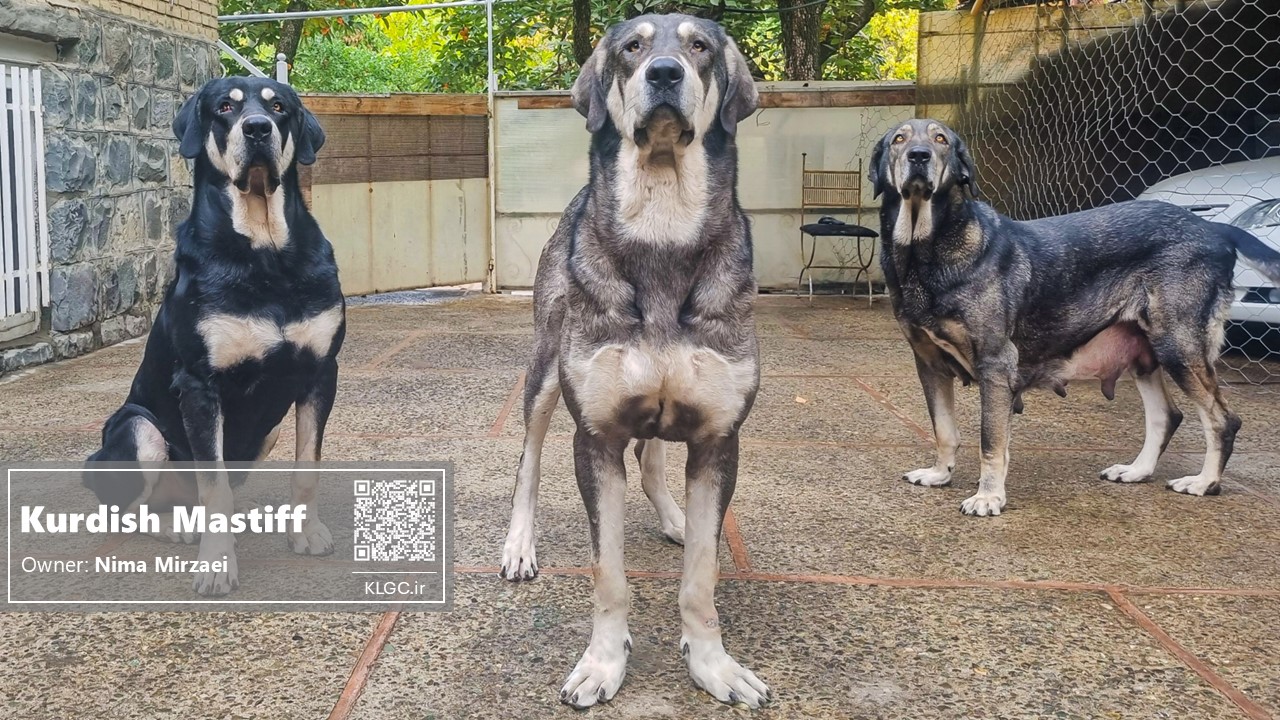
Kurdish mastiffs have been selectively bred for thousands of years to guard livestock, protect against thieves, and confront wild animals, making bravery and aggressiveness natural traits. Even as early as two weeks old, they display aggressive behaviors, growling and snarling at each other. Generally, Kurdish mastiffs are independent, proud, and not strongly attached to their owners. Despite their sensitivity and high intelligence, they require consistent training from puppyhood to become obedient. For them to develop gentle and friendly behavior toward humans and other dogs, training must occur between three and twelve weeks of age under the guidance of an experienced handler.
These dogs are highly territorial and will not tolerate intruders in their domain. They tend to be suspicious and aggressive toward other dogs unless raised with them from an early age. Their strong physical power and aggressive temperament make them unsuitable for inexperienced owners and indoor living. Caring for a Kurdish mastiff requires ample space to move freely, along with daily physical activity. Two one-hour patrols during the day are usually sufficient to meet their exercise and activity needs.
Conclusion
Iranian livestock guardian dogs are more than just protectors; they are a living testament to the country’s rich history of herding, pastoralism, and selective breeding. Each breed—the loyal Qahderijani, the powerful Sarabi, the brave Kurdish Mastiff, and the versatile Khorasani—demonstrates exceptional strength, intelligence, and dedication to their work. By understanding their origins, physical characteristics, and unique abilities, we gain a deeper appreciation for these extraordinary dogs and the crucial role they continue to play in safeguarding livestock and supporting rural communities across Iran.
Reference
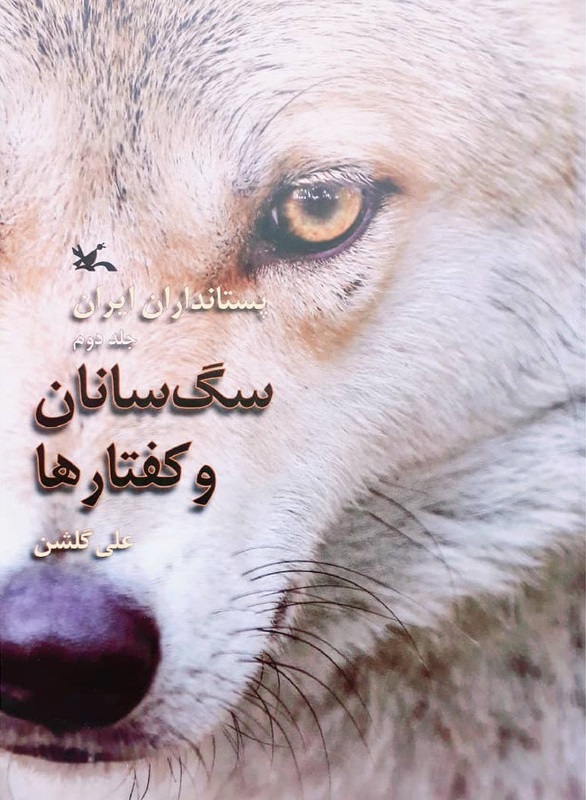
Mammals of Iran, Canids and Hyaenas
by Ali Golshan
About the Author

Ali Golshan
Author and Researcher
Ali Golshan, born in 1976, is a writer and researcher with a degree in Animal Science Engineering. He has authored books including Mammals of Iran, The Cry of the Cheetah, and Introducing the Turkmen Horse in Iran, as well as a four-volume series of selected bibliographies for children, adolescents, and school libraries. In addition, he has published more than 30 articles, reports, and interviews on environmental and wildlife issues in Iran, appearing in English-language journals of international organizations.