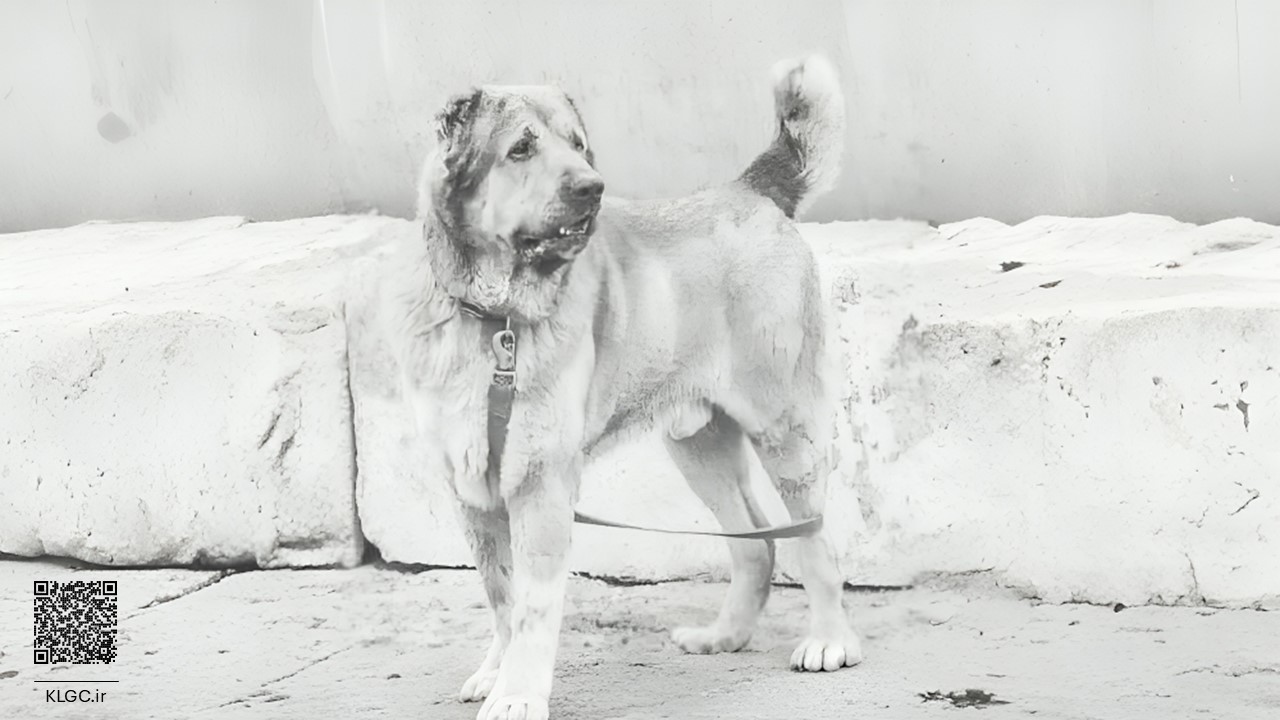

The Majestic Guardian of the East: The Khorasani Dog
Origin and Historical Background
Taybad is an ancient city in Khorasan Province, located near the border with Afghanistan. Archaeological findings show that at least by the third millennium BCE, people were living in this region. They were familiar with animal husbandry and farming, and to this day, they still rely on these livelihoods. Like herders in other parts of Iran, the people of this area used efficient livestock guardian dogs to protect their livestock and property from thieves and attacks by wild animals.
The origin of these dogs lies in parts of Central Asia, Khorasan, and some western regions of Afghanistan. The similarity of Khorasani dogs to the livestock guardian dogs of Central Asia and the Afghan livestock guardian dogs (also called Kuchi dogs) indicates a shared ancestry. Even so, living in different climatic conditions has caused slight differences in appearance among the dogs of each region.
Physical Characteristics
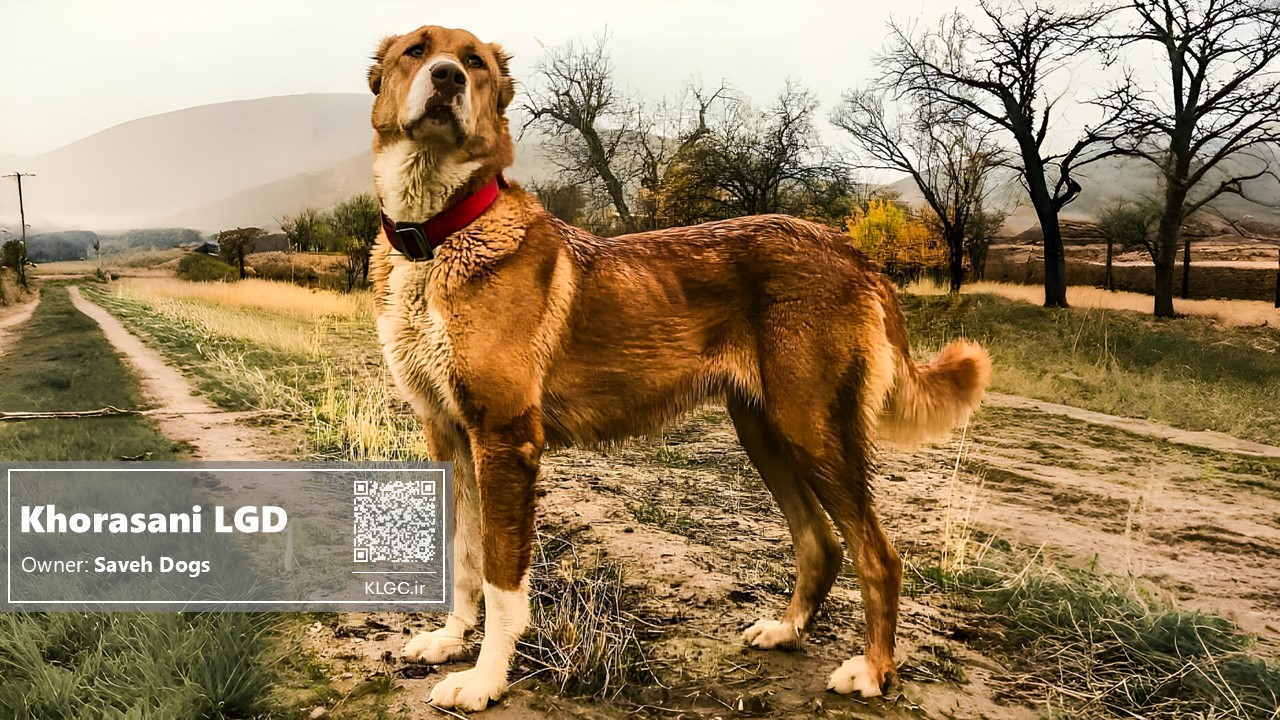
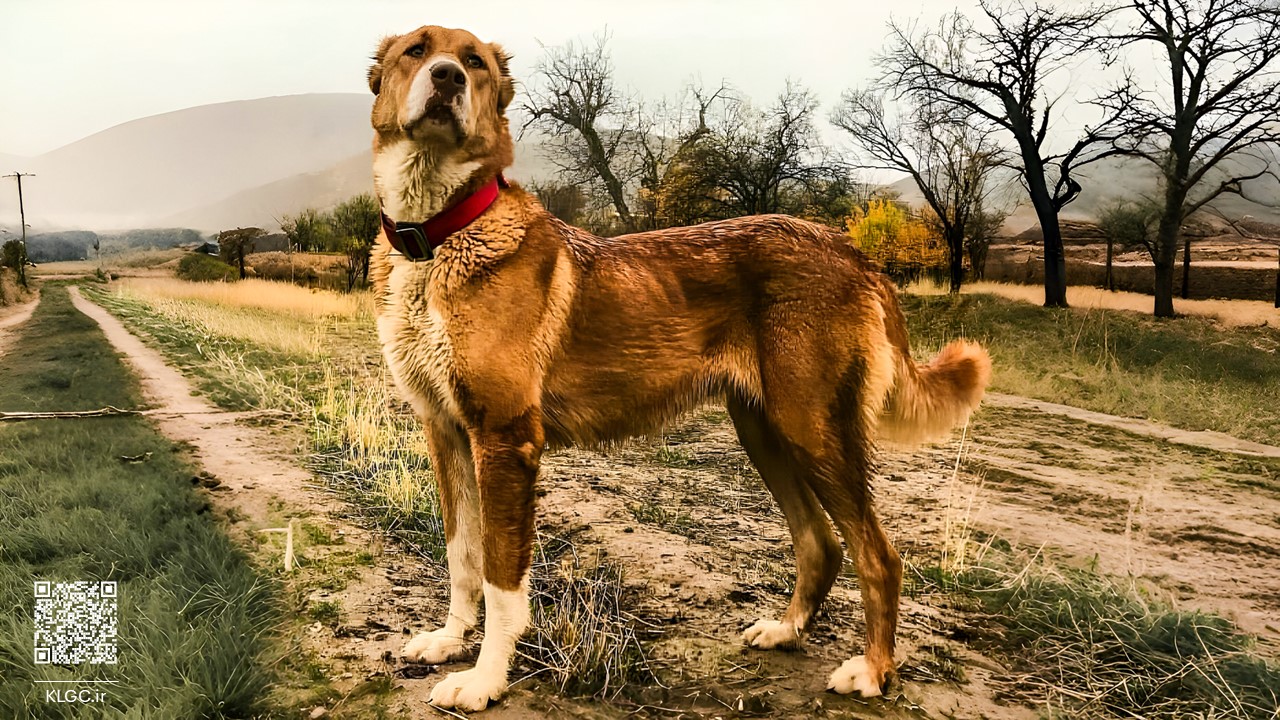
The Khorasani dog has a broad, large skull, a broad and short muzzle, powerful jaws, small eyes, medium drooping ears, a relatively short and thick neck, a broad chest, medium withers, a body that is not very long but heavy and muscular, thick and resilient skin, thick and strong legs, large paws, and a long, thick tail.
Khorasani shepherds divide these dogs into two distinct types. The first type is known as “Lion-like.” This type is large-framed and long-haired and is mostly seen in mountainous areas. The second type, known as “Leopard-like,” has a more delicate build and a less hairy body than the first type and lives in plains and low-lying areas. These dogs are more numerous and have more admirers than the first type.
Khorasani dogs show great color variety and are usually seen in white, cream, light brown, dark brown, brick-red, yellow, black, and piebald (white body background with brown and yellow spots). The most famous color among Khorasani dogs is the striped (tiger-like) coat, which is locally also called “Rakh” or “Mari.” The “Rakh” color has three kinds: Rakh-Sorkh (red-brick body background), Rakh-Sooz (gray body background), and Rakh-Sabz (greenish body background), each bearing dark vertical stripes.
Some Khorasani dogs have blue eyes, which are locally called “mirror eyes.” Sometimes one eye is blue and the other brown. In terms of coat, Khorasani dogs are divided into three groups: short, long, and medium-length coats. In most areas, short and coarse-haired specimens are generally more favored and valued.
Performance
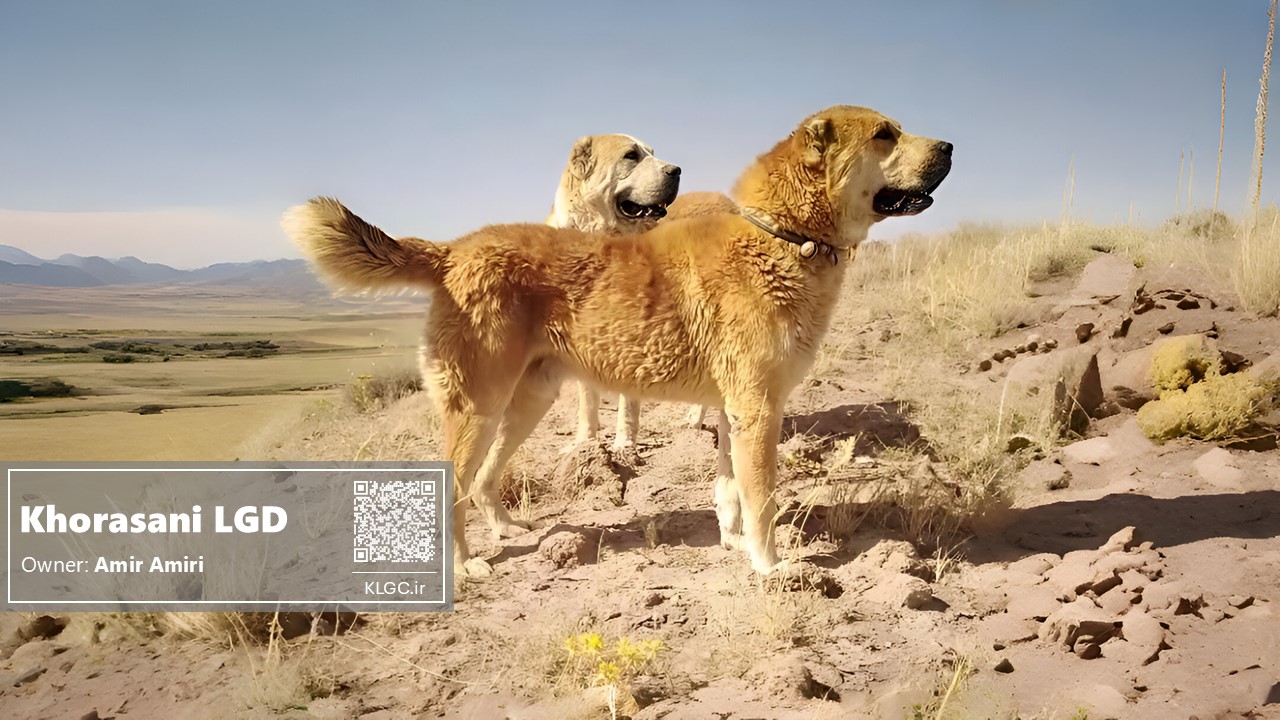
Khorasani dogs are classified as livestock guardian dogs. Because of their alertness, strength, and instinct to fight strangers and engage with wild animals, they are highly effective at protecting livestock herds. Their courage, agility, and fighting spirit have also led to their use in some regions for dog fighting.
Khorasani dogs are very wary and sensitive toward strangers, and they protect their owner’s property and belongings to the last breath. Their alertness and strong sense of duty have made many people use these dogs for guarding.
Training and Care
Shepherds usually keep their dogs with sheep and goats from puppyhood so the dogs become familiar with livestock. The ears and tail of the puppies are cut with a blade or scissors between four days and one month after birth. Some cut the tail halfway, while others remove all of it except for the last vertebra. Some Khorasani puppies are born with very short tails.
From six months of age, the puppies are taken into the herd together with older, more experienced dogs so they can learn the methods and ways of protecting the livestock. In Khorasan, as in many parts of Iran, shepherds feed their dogs with a mixture of barley flour, milk, and oil. Sometimes meat from donkeys that die of old age or injury is also given as food.
Khorasani dogs are highly resistant to harsh conditions and diseases. If a puppy becomes ill, it is separated from the others and kept in a warm place. Some shepherds apply henna to the legs and paws of their dogs from puppyhood, believing this makes the skin tougher and the paws harder, allowing the dog to move easily over rough and stony ground.
If Khorasani dogs are injured in fights with each other or in struggles with wild animals, shepherds treat their wounds with burnt oil, and if the injury is deep, they use a kind of black oil made from sheep dung.
Conclusion
Khorasani dogs are not only a vital part of the region’s pastoral heritage but also a living example of centuries of careful breeding and adaptation. Their strength, loyalty, and intelligence make them indispensable companions for shepherds, while their diversity in appearance and temperament reflects the unique environmental and cultural influences of Khorasan. Preserving these dogs and their traditional practices ensures that future generations can continue to benefit from their remarkable abilities and maintain a connection to the rich history of the region.
Related Posts
Reference
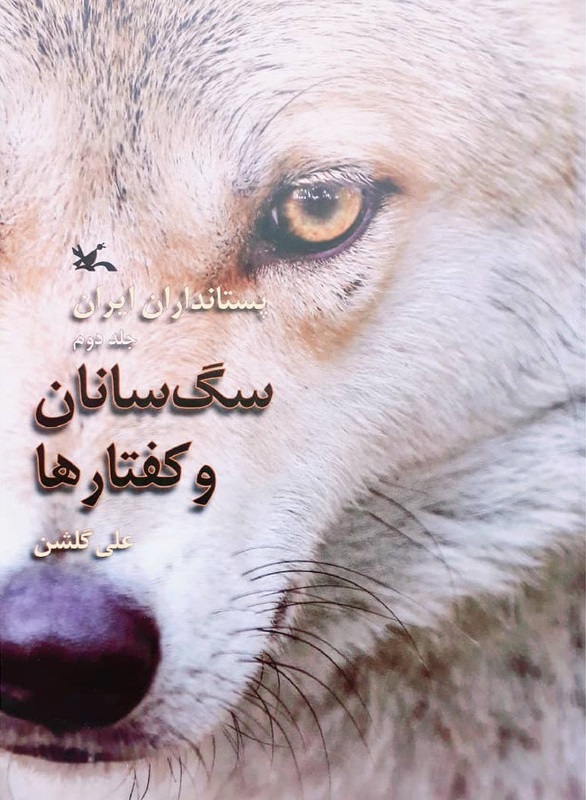
Mammals of Iran, Canids and Hyaenas
by Ali Golshan
About the Author

Ali Golshan
Author and Researcher
Ali Golshan, born in 1976, is a writer and researcher with a degree in Animal Science Engineering. He has authored books including Mammals of Iran, The Cry of the Cheetah, and Introducing the Turkmen Horse in Iran, as well as a four-volume series of selected bibliographies for children, adolescents, and school libraries. In addition, he has published more than 30 articles, reports, and interviews on environmental and wildlife issues in Iran, appearing in English-language journals of international organizations.